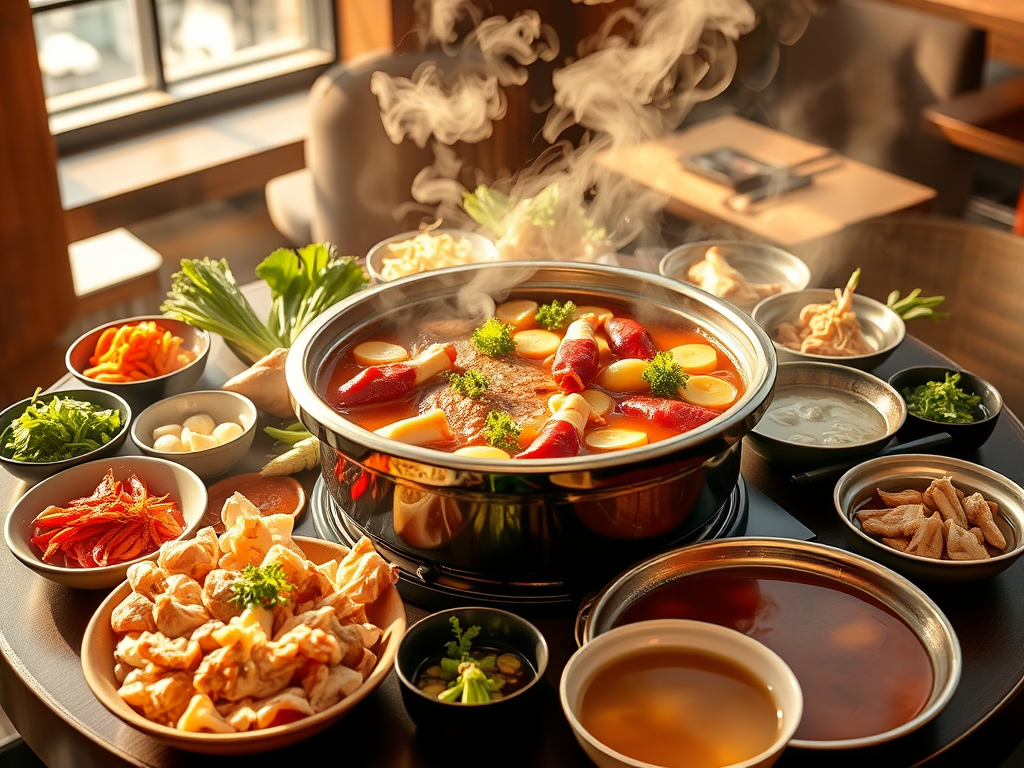
Let me get right into today’s topic. Imagine you have the following challenge to solve – How to create a multi-billion-dollar Asian restaurant brand that can sell globally?
Concept
First you got to pick a food concept to sell. Globally there are about over 30 restaurant chains that have market cap of above US$1bn. American fast-food chains dominate this list, mainly with products like burgers, sandwiches, chicken wings, pizzas, mixed bowls. These are proven to be highly scalable and profitable but not typical daily Asian food. Besides, you do not want to start a new business doing the same thing which the incumbents are best at anyway. So what do you choose to sell?
Several considerations at play: a popular Asian dish that has the universal appeal to (most) Asian cultures (and others), quick to prepare and serve, highly scalable and easy to standardize across different markets, and preferably something suitable for group sharing (Asian-style dining is more communal). There are only a handful of Asian dishes that can meet these requirements. Hotpot is one of those.
However, to achieve multi-billion-dollar value, you have to be able to extract a lot of profit out of this “ordinary” food that people can make at home. You need a brand / trademark that commands high margins.
So to summarize the task at hand – to create a global hotpot restaurant brand.
Differentiation
But since hotpot is so easy to make, there will be plenty of competitors. Your brand would have to be very differentiated. For a restaurant brand, key differentiation lies in product quality (good food) and dining experience (good service). To maximize profit, being good at one thing is not enough, you need both.
Good Food
Hotpot is a simple dish. It is mainly a mixture of fresh solid ingredients such as meat, seafood, vegetables and noodles, put into a boiling pot of flavorful broth. People can make it at home. So how does one go about creating a differentiated product?
First, you perfect the broth with your own recipes, some are unique enough that it can be quite time-consuming or even expensive to cook at home. Also, people can usually prepare for only one single kind of broth to eat at home, so you offer customers the choice to order 2, 3 or even 4 different types of broth at once in the restaurant. Similarly, there will be a big menu of solid ingredients for customers to choose from, all freshly made or sourced to ensure the best quality. The choices have to be abundant, otherwise your customers would see no additional value compared to doing their own grocery and cook at home for half the price.
Exceptional Service
Hotpot recipe cannot be protected, no matter how good your food is, eventually someone (even the eaters) will figure it out. So you have to set yourself apart on service.
Wait staff providing the bare minimum of taking orders and bringing out the food is absolutely not enough. They have to be trained to become highly attentive and responsive to diners, to the point of being able to anticipate their needs before they even know it. Imagine how demanding the staff skillset in a luxury hotel or resort can be, this is this level. Not some seasonal, part-time worker level.
Since customers dine in group and stay longer, more often than not, for some celebration, in-store entertainment, hence, becomes incredibly important. You want your staff to go above and beyond, and delight customers even further with table decoration, by singing birthday songs, dancing whilst making noodles, and sometimes delivering unique performances. All is to exceed any customer’s imaginable expectations.
Branding & Marketing
When customers start coming in more than the restaurant could serve at a single time, instead of waving them away or imposing strict reservation policy and dining time limit (these would go against your customer-centric philosophy), you want the guests to wait outside for whenever there is a table ready. You sacrifice just a tiny bit of profit to invest in a waiting area with fun activities, including even providing diners with manicure while waiting. The long line of customers “happily” waiting further accentuates the social proof around the brand.
And not to worry, the extra investment into all these seemingly extravagant benefits shall pay for themselves and some change. Because there are always guests for whenever a table becomes available. This reduces downtime and increases table turnover rate while raising customer satisfaction.
A combination of “slightly-differentiated” products but with “exceptional” service reinforces the brand. Whenever they think about the restaurant, customers remember about the hair tie given to them before they even think of asking for one, the unique performances they saw or the birthday song the staff sang to them on their special day. People associate the brand with family time, with happy memories.. the intangible value that is hard to replicate.
Organizational Structure
F&B service is an 24/7 industry. You have to do the right things all the time. Little screw-ups that might have been accepted somewhere else are simply not allowed here. Hence, you do not want to risk expanding through a franchise model. It is almost impossible to teach your franchisee and their staff the extreme service culture you require. So how do you quickly expand your restaurant network globally using your own resources while maintaining the integrity of your product and service?
The answer is by Decentralization.
While hotpot is quite universal, consumer tastes are different across different countries. You, sitting in your little headquarters, cannot possibly understand all the intricacies in dining cultures, tastes, and preferences among hotpot diners in different regions. So you delegate the country/region CEOs to decide on special food / ingredients, new dishes, marketing strategy, store layout, new location expansion, etc.
Then as the in-store operations can be quite complex with a special focus on customers, the restaurant manager should also be empowered to make the daily decisions to maximize both guests’ dining experience and profitability.
Incentives
When you have your people make most important decisions for you, how do you make sure their decisions are aligned with your interest as the owner? You give them the right KPI, with a carrot and a stick.
No doubt that customer satisfaction would have to be the most important KPI here and profit shall follow almost automatically. You really do not even need to impose a long list of operational or financial KPIs on your people. And you should even be willing to promote someone who starts with the company as a waitress >20 years ago to become the group CEO. It is your company’s mission to delight customers and your staff should understand that.
To align financial interests, country CEOs and restaurant managers should get to share into the profit of the unit under their management. This is the carrot. Some top key executives can get share ownership in the company with longer-term commitment. But the middle or below managers, especially at restaurant level, would see less value in share ownership since there is too much out of their control. They need to be able to share in the cash profit of the unit under their care.
The restaurant staff would be the one closest to the customers. They have to be motivated by a suitable compensation structure, especially most Asian countries do not have tip culture. Their pay should include different tiers to make sure not only do they show up in time for their shift, they would also get rewarded for delighting customers. And instead of hiring seasonal workers, you invest in your people from the ground up. Long-tenure and high-performing wait staff shall be promoted to store manager. They then shall be empowered to seek location to open a new store, oversee the store’s operations and start sharing in its profit.
The carrot has to come with the stick. You set up a team of investigators who will be “secret diner” to travel around and eat at your network of restaurants globally. Any complaints the secret diners report back to the headquarters, the restaurant manager and their staff shall be liable.
Putting everything together
A combination of all the things above shall create a flywheel that takes a lot to grease. The brand positioning, the mission, the food, the service, the customers, the staff, the organizational structure and culture, KPIs & incentive structure – everything has to work in sync, and for a long time. Lollapalooza results cannot just happen overnight. Someone cannot simply come in tomorrow with a new competing hotpot brand. It will cost them hell a lot of time and money to market a new brand, come up with better recipes, perfect the menu, hire the right people and train them to deliver exceptional services, rolling out new stores, gain critical mass to be profitable, then do it again and again across different locations and regions. They just cannot replicate one element and hope to be successful, it has to be the whole package.
By the time someone can figure it all out, your brand would have become the de-facto name for hotpot. The moat of your business, hence, could last for a very long time.
***
Howard Marks says insight is the key to successful investing. You really do not need to be a math genius, but you do need to possess differentiated insights about certain things to have an edge in the investment world. I believe critical thinking is the most important quality in investing – but not being able to complete an LBO model within 3 hours!
When looking at a business to invest in, one of the requirements in my investment checklist is to be able to understand the business and then assess the strength of its moat. A useful exercise for me is to develop a mental model of how to replicate the business from scratch and see how difficult / easy that would be.
The above is a mental model on a business that I have come to admire greatly – Haidilao. After the tremendous success they have built in Mainland China, the business is expanding globally through a separate carved-out entity called Super Hi, which is also publicly listed on Hong Kong Stock Exchange and Nasdaq. The China business (Haidilao) is ~US$12bn market cap while the international business (Super Hi) is >US$1bn market cap.
Super Hi currently only has around 120 restaurants outside China, mainly in Southeast Asia (Singapore and Vietnam) and is expanding to other regions such as ex-China North Asia, North Americas, EU and others. How long of a growth runway do you think Super Hi still has? And is the current market cap of over US$1bn cheap or expensive?
Anyway, this is by no means an investment advice, so DYOR (Do your own research) before you make any moves.
***
Little announcement to make: I have personally invested in a proper domain, just so no one will have to see random ads pop up (just to be clear, I received no fee from these ads). You can now find me at: https://espressoinvestor.com/
Until next time!

 The Espresso Investor
Leave a reply to Hannah Cancel reply